
-
By: automotive-admin
- Comments Off on Electric vs Petrol vs Hybrid: Which Used Car Should You Buy in the UK?
Electric Cars UK: Compare Used Electric, Petrol, and Hybrid Vehicles
Walk onto a used car lot somewhere in the UK, and the choice hits you immediately. Electric. Petrol. Hybrid. A decade ago, such variety wouldn’t have crossed anyone’s mind. Not merely picking colours or trim levels. This determines everything—how your vehicle performs, what fuel costs drain from your account, whether you cling to familiar technology or embrace what comes next. Electric cars have fundamentally reshaped the UK’s second-hand market. Understanding where they sit now matters. Miss this shift, and you risk a poor purchase.
Let me walk you through the hard truths of each option. I skip past marketing speak entirely. You’ll see exactly what each powertrain offers—fuel expenses, reliability, charging availability, practicality. By the end, your choice becomes obvious based on how you actually drive, what your budget allows, and your daily needs.
Electric Cars UK: How the Used Market Has Matured Faster Than Expected
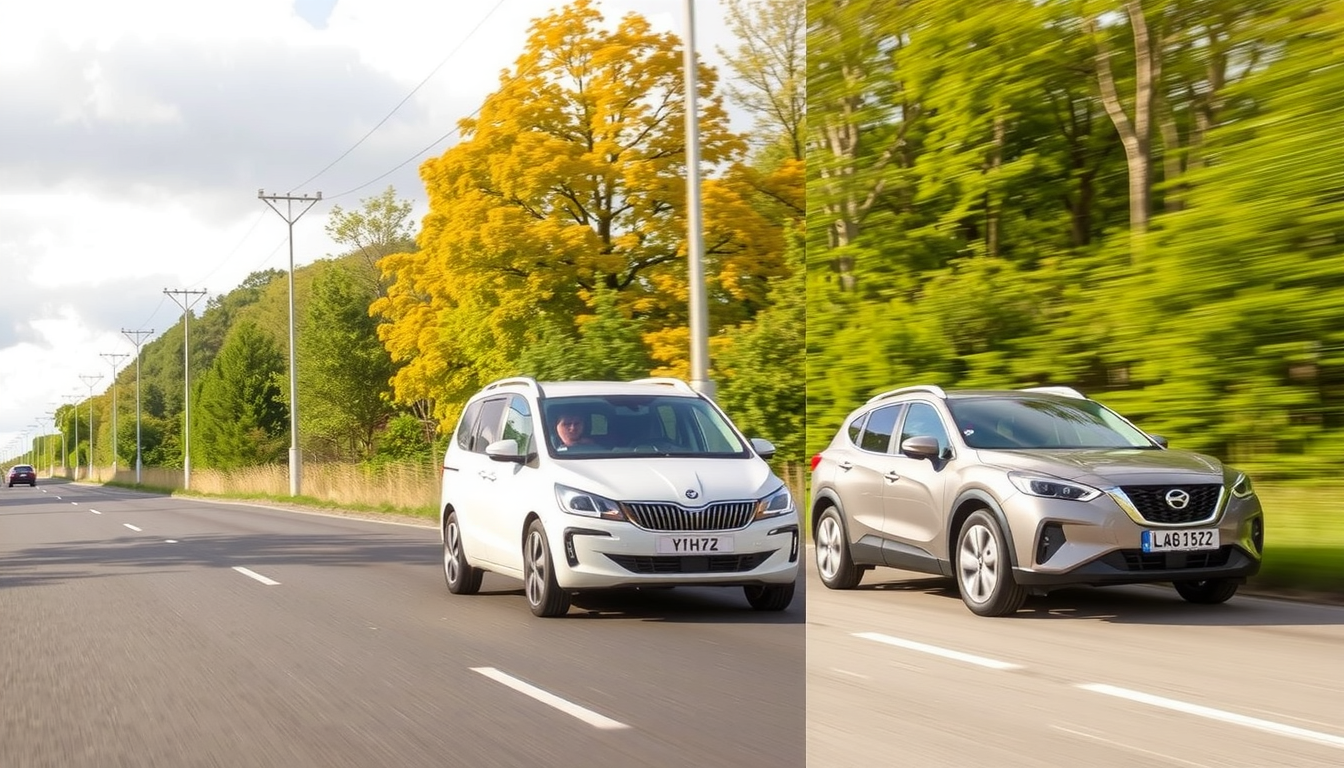
Five years back, buying a pre-owned electric felt like gambling in the dark. Today, solid data guides the decision. UK second-hand electric sales jumped 37 percent between 2023 and 2024. Budget-friendly electric options no longer occupy the fringe.
Battery degradation fears. Mostly unfounded. Research from the RAC and Recurrent shows most battery packs retain 90 percent capacity after 150,000 miles. Buy a second-hand Tesla Model 3 with 80,000 on the clock. Range stays close to factory specs, losing perhaps 10 to 15 miles at worst. Buyers now approach these purchases with confidence. No anxiety.
Pricing reflects this maturity. A 2021 Nissan Leaf with 30,000 miles commands £18,000 to £22,000. A 2020 Tesla Model 3 Standard Range at similar mileage runs £28,000 to £32,000. These aren’t bargain-bin prices. Far from it. Compare a 2021 petrol VW Golf at the same mileage—£16,000 to £20,000. Electric cars carry a modest 10 to 20 percent premium. Three years ago, that gap was double.
Running Costs: Where Electric Cars UK Deliver Genuine Savings
The numbers here are striking. UK electricity averaged 24 pence per kilowatt-hour in early 2026. Electric vehicles consume 4 to 5 pence per mile. Petrol cars achieving 45 miles per gallon cost 13 to 15 pence per mile at current prices of 135 to 140 pence per litre.
Drive 10,000 miles annually. The gap widens to £900 to £1,100 yearly. Over a typical five-year ownership span, that’s £4,500 to £5,500 in fuel savings alone.
Maintenance tells another story. No oil changes. Transmission fluid, spark plugs, belts—all irrelevant. Regenerative braking means brake pads last three times longer. Petrol used cars demand £800 to £1,200 in annual maintenance. Electric vehicles need £200 to £400. Tyres wear. Fluid checks happen. Over five years, that’s another £3,000 to £4,000 saved.
Hybrids occupy awkward middle ground. Engine maintenance persists—oil, plugs, transmission service—alongside battery costs. Brakes benefit from regenerative systems. Savings remain muted. Hybrids trim 20 to 30 percent off petrol costs while trailing electric savings by 40 to 50 percent.
The Charging Infrastructure Question: No Longer a Barrier
Three years ago, charging infrastructure was the central concern. Today, the picture changed entirely. Over 50,000 public charging points spread across the UK. InstaVolt, BP Pulse, Pod Point dominate the landscape. London alone has 12,000. Even rural areas—the Cotswolds, Scottish highlands—now feature solid coverage.
For a used electric buyer, parking access becomes the crucial factor. Own a driveway or garage. Install a 7kW home charger for £500 to £1,200. This covers 90 percent of charging needs. You wake to a full battery. Most drivers need 150 to 250 miles daily. Public chargers gather dust for typical UK users.
Street parking only. Public charging becomes necessary. Expect 30 to 90 minutes plugged in, depending on charger speed. Planning trips by location matters. It’s doable but demands more forethought than petrol convenience or hybrid flexibility.
Petrol vehicles refuel at 8,400 stations in five minutes. Hybrids match this with gas backup. That edge remains. For steady local driving, it fades.
Range and Real-World Driving: Where Marketing Meets Reality
Manufacturers advertise generous ranges. Tesla Model 3 Standard claims 254 miles. Real-world UK driving delivers 210 to 240. Winter conditions and motorway speeds cut that to 180 to 200. Nissan Leaf promises 168 miles. Actual performance lands 140 to 160.
Your driving pattern determines whether this matters. Covering 30 to 40 miles daily with occasional 100-mile trips. A 2022 Vauxhall Corsa-e fits perfectly. Its 168-mile rating translates to genuine 140-mile range. Daily workhorse. Regular 200-plus mile journeys. Electric vehicles require charging stops.
Petrol tanks provide 400 to 550 miles. Hybrids stretch 400 to 600. Long-distance commuters and frequent road-trippers gravitate toward these.
Depreciation: The Hidden Cost Nobody Discusses
Used petrol cars depreciate predictably. A 2020 VW Golf at £18,000 today drops to £12,000 within three years. That’s standard—33 percent decline.
Electric vehicles shed value faster initially, though the curve stabilizes. A 2020 Tesla Model 3 priced at £32,000 today reaches £22,000 to £24,000 after three years. That’s 25 to 30 percent. Fuel savings cushion this hit substantially.
Hybrids follow petrol patterns. Expect 30 to 35 percent three-year depreciation. They miss the electric fuel advantage while maintaining traditional depreciation curves.
Total ownership cost tells the real story. An £32,000 electric car depreciates to £24,000 after three years. Factor in £4,500 fuel savings and £1,200 maintenance reductions. True cost: £13,700. An £18,000 petrol car drops to £12,000. Add £4,500 fuel plus £3,600 maintenance. True cost: £14,100. Electric edges past upfront sticker shock.
Reliability and What the Used Car Warranty Tells You
Pre-owned electric vehicles come with impressive warranty coverage. Cazoo and Cinch extend three-year warranties on pre-2024 purchases. Confidence shines through that commitment. Beyond three years, coverage typically falls to one or two years maximum.
Warranty Direct data glows. Electric powertrains fault less frequently. Motors contain 20 moving parts. Petrol engines have 2,000. Simplicity wins. Hybrids occupy the middle.
Three to five-year-old electric vehicles outperform petrol peers on reliability metrics. The odds genuinely shifted.
The Government Incentive Landscape: What’s Actually Available Now
The £3,500 new EV grant vanished in June 2022. Pre-owned vehicles receive minimal government support. London’s EV Fund provides £2,000. Scotland offers £2,500. Regional schemes remain thin. Check your council’s website for specifics.
Tax treatment favours electric vehicles. They escape Vehicle Excise Duty entirely. Petrol cars pay £160 annually after the first year. Pre-2020 hybrids avoid this tax. Newer hybrids pay full rate. Over five years, petrol owners sacrifice £800.
Making Your Decision: A Practical Framework
Off-street parking exists. Daily driving stays under 200 miles. You plan to keep the car three to five years. Electric makes sense. Costs drop. Reliability matches UK roads. Home charging works seamlessly.
Regular drives exceed 300 miles. No home charging available. You’ll keep the vehicle seven-plus years. Petrol fits your pattern.
Hybrids bridge the gap for undecided buyers. You sacrifice full electric efficiency gains. You miss pure petrol simplicity. The premium paid for splitting the difference rarely justifies either advantage fully.
The UK’s second-hand electric market matured rapidly. Budget-friendly options shed their experimental status. Most drivers benefit from switching. Charging networks stand ready. The maths support the shift. Unless long-distance drives or absent home charging dominate your situation, electric cars represent the smarter financial and practical choice for UK drivers today.